Partitioned Survival Model — Breast Cancer

Survival curve fitting, extrapolation, and area-under-the-curve partitioning

R for HTA (Basics) — Workshop 2026

RRC-HTA, AIIMS Bhopal | HTAIn, DHR

Clinical Question: HER2+ Breast Cancer in India

Breast cancer: 27% of all cancers in Indian women

Trastuzumab (anti-HER2 antibody) in HER2+ patients: - Improves disease-free survival by ~50% - Improves overall survival by ~30%

But: Cost ₹50,000–₹1,00,000 per dose; used in only 8.6% of eligible patients

The question: Is 1-year adjuvant trastuzumab cost-effective vs chemotherapy alone?

What is a Partitioned Survival Model (PSM)?

Unlike Markov models (transition probabilities between states), PSM uses survival curves directly to determine state occupancy.

Three health states:

Progression-Free (PF) - Alive, no progression - Utility: 0.80

Progressed Disease (PD) - Alive, disease progressed - Utility: 0.55

Dead - Utility: 0 - Cost: 0

State Occupancy: The Area-Under-Curve Concept

At any time point \(t\):

\[\text{Proportion in PF} = \text{PFS}(t)\]

\[\text{Proportion in PD} = \text{OS}(t) - \text{PFS}(t)\]

\[\text{Proportion Dead} = 1 - \text{OS}(t)\]

Key insight: All costs and QALYs come from integrating under these curves.

Code
library(DiagrammeR)

grViz("
digraph psm_structure {
  graph [rankdir=LR, bgcolor='transparent', fontname='Helvetica', nodesep=0.6]
  node [fontname='Helvetica', fontsize=10, style='filled,rounded', shape=box]

  PF [label='Progression-Free\n(PF)', fillcolor='#59a14f', fontcolor='white', width=2]
  PD [label='Progressed\nDisease (PD)', fillcolor='#f28e2b', fontcolor='white', width=2]
  Dead [label='Dead', fillcolor='#bab0ac', fontcolor='white', width=2, shape=doublecircle]

  PF -> PD [label='Progression']
  PD -> Dead [label='Death']
  PF -> Dead [label='Death', style=dashed]
}
")
Figure 1: PSM health states and transitions

Key Model Parameters

# Time horizon
time_horizon <- 20  # years

# Weibull distributions (fitted to HERA trial data)
# S(t) = exp(-lambda * t^gamma)

# CONTROL: Chemotherapy alone
os_lambda_control  <- 0.045
os_gamma_control   <- 1.15
pfs_lambda_control <- 0.12
pfs_gamma_control  <- 1.05

# INTERVENTION: Trastuzumab + Chemo
hr_os  <- 0.70   # 30% reduction in mortality
hr_pfs <- 0.50   # 50% improvement in DFS

# Costs (₹/year)
cost_pf_trast  <- 420000    # Year 1 (6-8 doses)
cost_pd        <- 180000    # Palliative care
utility_pf     <- 0.80
utility_pd     <- 0.55
discount_rate  <- 0.03

Survival Curves: Trastuzumab vs Chemo Alone

Code
library(ggplot2)

# Weibull survival function
weibull_surv <- function(t, lambda, gamma) {
  exp(-lambda * t^gamma)
}

time_points <- seq(0, 20, by = 1)

# Generate curves
surv_data <- data.frame(
  Time = rep(time_points, 4),
  Survival = c(
    weibull_surv(time_points, 0.045, 1.15),
    weibull_surv(time_points, 0.045 * 0.70, 1.15),
    weibull_surv(time_points, 0.12, 1.05),
    weibull_surv(time_points, 0.12 * 0.50, 1.05)
  ),
  Curve = rep(c("OS - Chemo", "OS - Trastuzumab",
                "PFS - Chemo", "PFS - Trastuzumab"),
              each = length(time_points)),
  Type = rep(c("OS", "OS", "PFS", "PFS"), each = length(time_points))
)

ggplot(surv_data, aes(x = Time, y = Survival, colour = Curve, linetype = Type)) +
  geom_line(linewidth = 1.1) +
  scale_colour_manual(values = c("OS - Chemo" = "#e15759",
                                  "OS - Trastuzumab" = "#4e79a7",
                                  "PFS - Chemo" = "#f28e2b",
                                  "PFS - Trastuzumab" = "#59a14f")) +
  scale_linetype_manual(values = c("OS" = "solid", "PFS" = "dashed")) +
  labs(x = "Years", y = "Survival Probability",
       title = "Trastuzumab Improves Both OS and PFS") +
  theme_minimal() +
  theme(legend.position = "bottom")
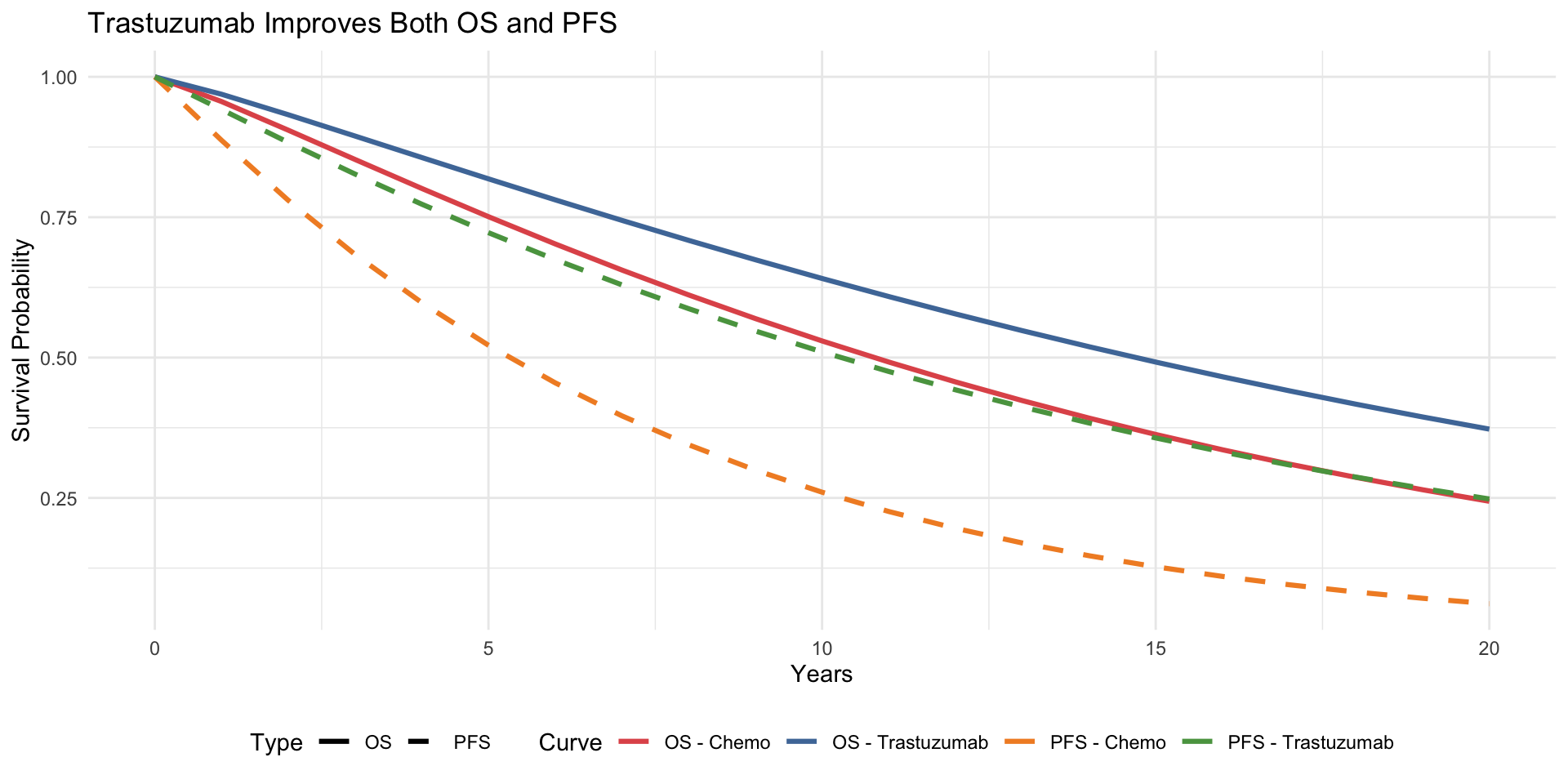
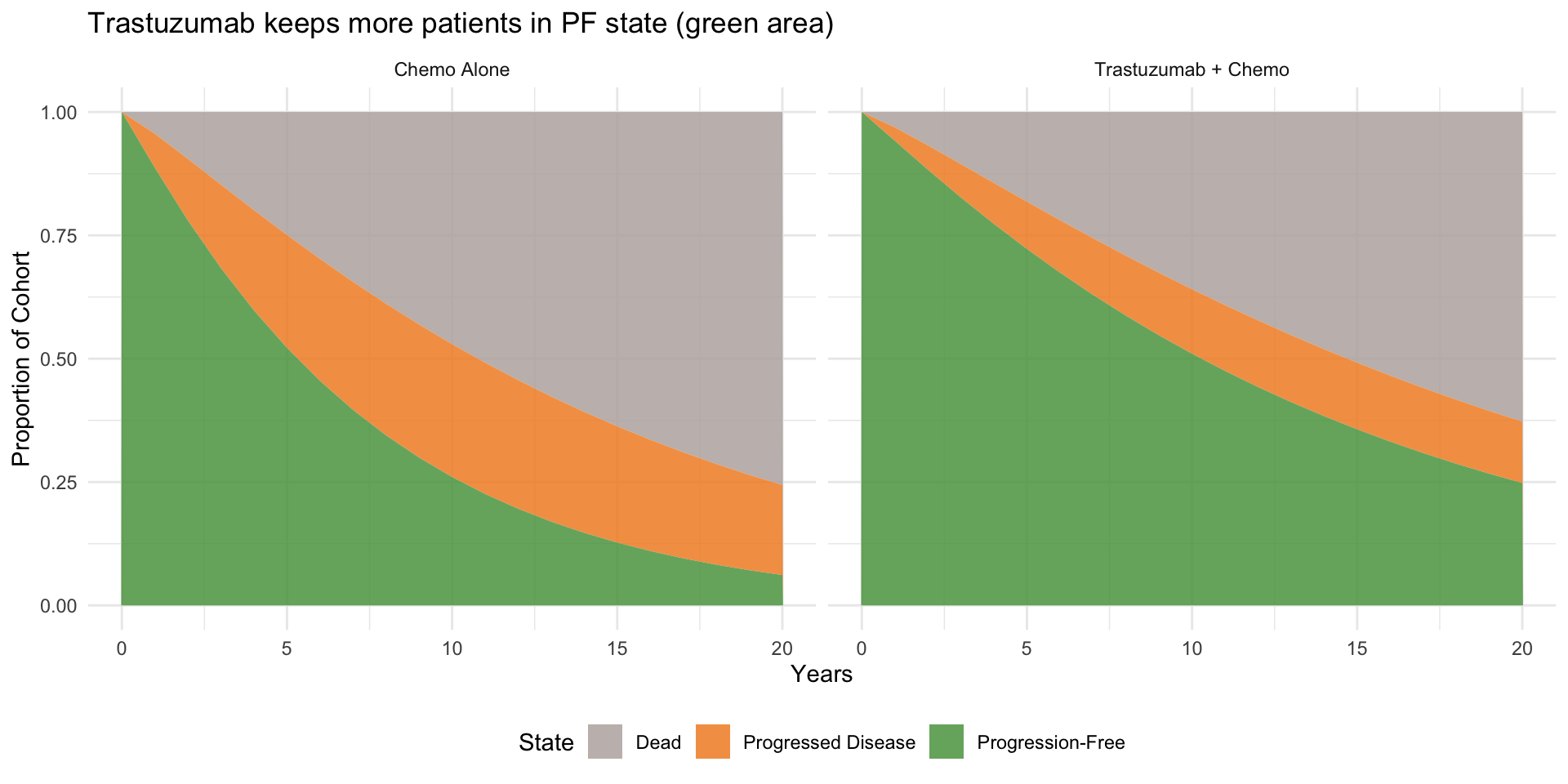
Figure 2: OS and PFS curves for both strategies

State Occupancy Over Time

Code
library(tidyr)

# Calculate state occupancy
os_control  <- weibull_surv(time_points, 0.045, 1.15)
pfs_control <- weibull_surv(time_points, 0.12, 1.05)
os_intervention  <- weibull_surv(time_points, 0.045 * 0.70, 1.15)
pfs_intervention <- weibull_surv(time_points, 0.12 * 0.50, 1.05)

# Ensure PFS ≤ OS
pfs_control <- pmin(pfs_control, os_control)
pfs_intervention <- pmin(pfs_intervention, os_intervention)

# State proportions
state_data <- data.frame(
  Time = rep(time_points, 6),
  Proportion = c(
    pfs_control, os_control - pfs_control, 1 - os_control,
    pfs_intervention, os_intervention - pfs_intervention, 1 - os_intervention
  ),
  State = rep(rep(c("Progression-Free", "Progressed Disease", "Dead"),
                  each = length(time_points)), 2),
  Strategy = rep(c("Chemo Alone", "Trastuzumab + Chemo"),
                 each = 3 * length(time_points))
)

state_data$State <- factor(state_data$State,
                           levels = c("Dead", "Progressed Disease", "Progression-Free"))

ggplot(state_data, aes(x = Time, y = Proportion, fill = State)) +
  geom_area(alpha = 0.85) +
  facet_wrap(~Strategy) +
  scale_fill_manual(values = c("Progression-Free" = "#59a14f",
                                "Progressed Disease" = "#f28e2b",
                                "Dead" = "#bab0ac")) +
  labs(x = "Years", y = "Proportion of Cohort",
       title = "Trastuzumab keeps more patients in PF state (green area)") +
  theme_minimal() +
  theme(legend.position = "bottom")
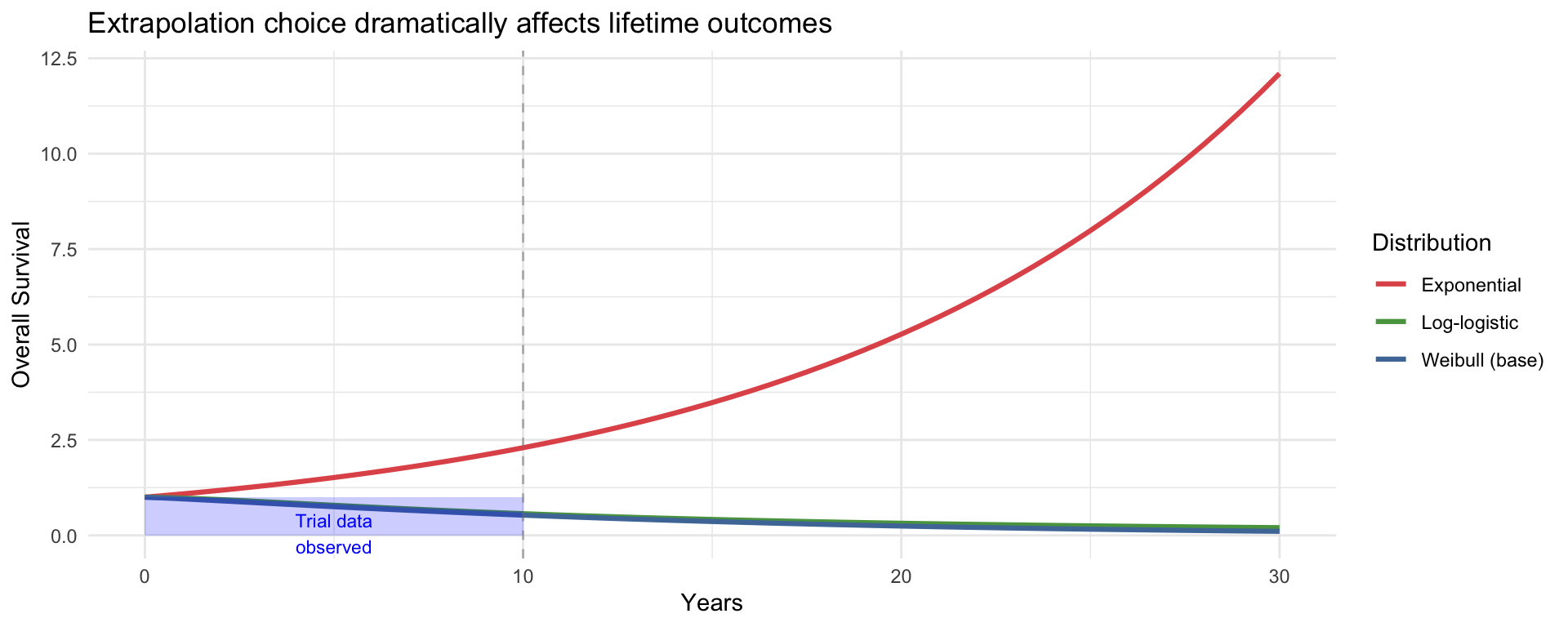
Figure 3: Proportion of cohort in each health state

Calculating Costs and QALYs

# Half-cycle correction: average proportion between cycles
n_cycles <- 20
hcc_pf_control   <- (pfs_control[1:n_cycles] + pfs_control[2:(n_cycles+1)]) / 2
hcc_pd_control   <- (os_control[1:n_cycles] - pfs_control[1:n_cycles] +
                     os_control[2:(n_cycles+1)] - pfs_control[2:(n_cycles+1)]) / 2

# Discount factors
discount_factors <- 1 / (1.03)^(0:(n_cycles - 1))

# Control arm costs (constant throughout)
cost_per_cycle_control <- hcc_pf_control * 25000 + hcc_pd_control * 180000
total_cost_control <- sum(cost_per_cycle_control * discount_factors)

# Intervention: Year 1 has trastuzumab cost, then maintenance
cost_pf_by_year <- c(420000, rep(25000, n_cycles - 1))
cost_per_cycle_intervention <- hcc_pf_control * cost_pf_by_year + hcc_pd_control * 180000
total_cost_intervention <- sum(cost_per_cycle_intervention * discount_factors)

# QALYs
qaly_per_cycle_control <- hcc_pf_control * 0.80 + hcc_pd_control * 0.55
qaly_per_cycle_intervention <- hcc_pf_control * 0.80 + hcc_pd_control * 0.55
total_qaly_control <- sum(qaly_per_cycle_control * discount_factors)
total_qaly_intervention <- sum(qaly_per_cycle_intervention * discount_factors)

ICER: Incremental Cost-Effectiveness Ratio

inc_cost <- total_cost_intervention - total_cost_control
inc_qaly <- total_qaly_intervention - total_qaly_control
icer <- inc_cost / inc_qaly

wtp <- 170000

# 4-quadrant interpretation (same as Session 5)
if (inc_cost < 0 & inc_qaly > 0) {
  cat("DOMINANT (cheaper AND better)\n")
} else if (inc_cost > 0 & inc_qaly < 0) {
  cat("DOMINATED\n")
} else if (inc_cost > 0 & inc_qaly > 0) {
  if (icer < wtp) cat("Cost-effective\n") else cat("Not CE\n")
} else { cat("Trade-off\n") }

# NMB
inc_nmb <- wtp * inc_qaly - inc_cost
cat("ΔNMB: ₹", format(round(inc_nmb), big.mark=","), "\n")

ICER and NMB Results

ICER ≈ ₹1,02,000/QALY — cost-effective at WTP = ₹1,70,000

ΔNMB ≈ ₹1,11,000 — positive → ADOPT

Published estimate (Shrestha et al. 2020): ₹1,34,413–₹1,78,877 per QALY

Critical: Extrapolation Beyond Trial Data

Why does distribution choice matter?

Code
t_extrap <- seq(0, 30, by = 0.5)

# Three distributions, all calibrated to 5-year survival ~66%
weibull <- exp(-0.045 * t_extrap^1.15)
exponential <- exp(-log(0.66) / 5 * t_extrap)
loglogistic <- 1 / (1 + (t_extrap / 12)^1.5)

extrap_data <- data.frame(
  Time = rep(t_extrap, 3),
  Survival = c(weibull, exponential, loglogistic),
  Distribution = rep(c("Weibull (base)", "Exponential", "Log-logistic"),
                     each = length(t_extrap))
)

ggplot(extrap_data, aes(x = Time, y = Survival, colour = Distribution)) +
  geom_line(linewidth = 1.1) +
  annotate("rect", xmin = 0, xmax = 10, ymin = 0, ymax = 1,
           alpha = 0.2, fill = "blue") +
  annotate("text", x = 5, y = 0.05, label = "Trial data\nobserved",
           colour = "blue", size = 3) +
  geom_vline(xintercept = 10, linetype = "dashed", colour = "grey50", alpha = 0.5) +
  scale_colour_manual(values = c("Weibull (base)" = "#4e79a7",
                                  "Exponential" = "#e15759",
                                  "Log-logistic" = "#59a14f")) +
  labs(x = "Years", y = "Overall Survival",
       title = "Extrapolation choice dramatically affects lifetime outcomes") +
  theme_minimal() +
  theme(legend.position = "right")
Figure 4: Same observed data (blue shaded region), different extrapolations

The PSM Workflow (Summary)

  1. Fit survival distributions to trial PFS and OS data

  2. Partition state occupancy using OS − PFS relationship

  3. Apply costs and utilities to each state × time

  4. Discount and sum over time horizon

  5. Perform sensitivity analyses on distribution choice and parameters

Tip

Key advantage over Markov: You work directly with trial survival data, not estimated transition probabilities.

Key limitation: Cannot easily model treatment switching or dependent transitions.

Trastuzumab: Cost-Effective or Not?

Benefits: - Extra ~2.5 QALYs gained - 30% mortality reduction - Improves quality of life (PF years)

Costs: - ₹6–9 lakhs per patient - Year 1 burden heaviest - Ongoing monitoring costs

Result: ICER ≈ ₹1.5–1.8 lakhs/QALY

Decision: Probably cost-effective by Indian standards, but decision uncertainty is high.

Key Takeaways

  1. PSM separates PFS and OS directly from trial data
  2. State occupancy: PF = PFS, PD = OS − PFS, Dead = 1 − OS
  3. HCC, discounting, ICER, NMB — same as Markov (Session 5)
  4. Extrapolation choice matters enormously — always test multiple distributions
  5. Apply HR by scaling λ (proportional hazards, not AFT)

Bonus Materials

  • Excel companion — Breast-Cancer-PSM.xlsx for cross-validation
  • Pen-and-paper worksheet — PSM concepts by hand (state occupancy, HCC, ICER, NMB)

→ See the Downloads page on the workshop website.

Next: Quantify parameter uncertainty with PSA (Session 9)

References

  • Shrestha A, et al. (2020). Cost-effectiveness of trastuzumab for HER2+ breast cancer in India. JCO Global Oncology.
  • NICE DSU Technical Support Document on survival analysis for HTA
  • Latimer NR. (2013). Survival analysis for economic evaluations alongside clinical trials. British Medical Journal, 346, f1147
  • Fitzsimmons D, et al. Partitioned survival analysis for HER2-positive breast cancer: methodological issues.